If you’ve spent any amount of time in the Dominican Republic,
you’ve likely seen larimar. But I bet you've not seen it like this.
If you’ve spent any amount of time in the Dominican Republic, you’ve likely seen larimar.
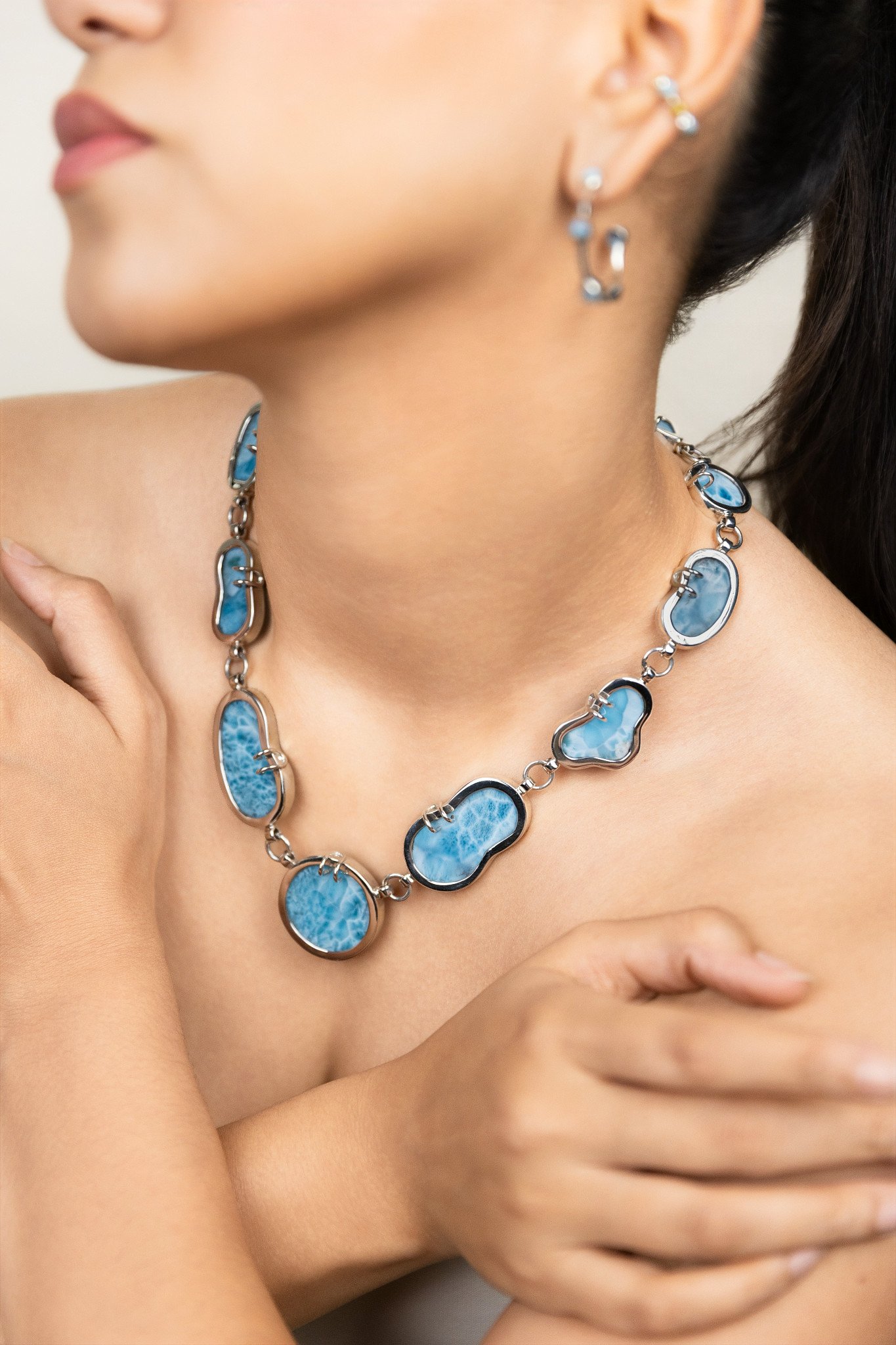
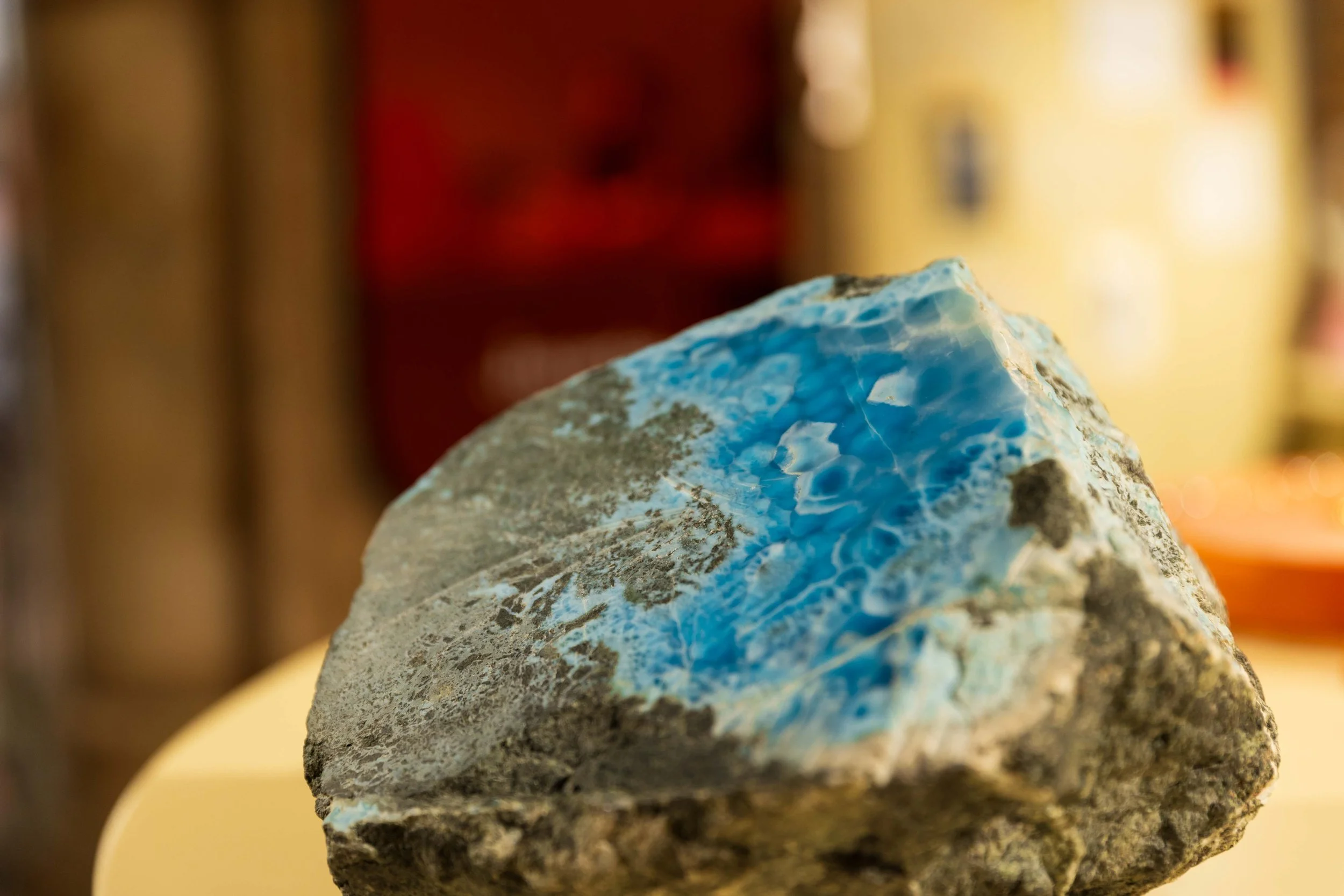
The bright blue stone appears in gift shops throughout the tourist districts, usually set into silver jewelry and thrown around in a mixed box of pendants and rings. Most of the pieces barely hint at what the stone can become. But if polished carefully and cut by the right hands, larimar carries an almost otherworldly beauty — blue like shallow Caribbean water streaked with white sea foam.
I fell in love with the stone years ago while living in the Dominican. I loved it enough that I once searched the island for a larimar engagement ring, hoping to find something that felt timeless rather than touristy. At the time, I couldn’t find it.
Larimar is quintessentially Dominican, but it’s history is checkered. The mines are dangerous, the artisans are often not respected, and everyone wants a piece of the pie.
At the centre of much of that modern history is the Caridad family.
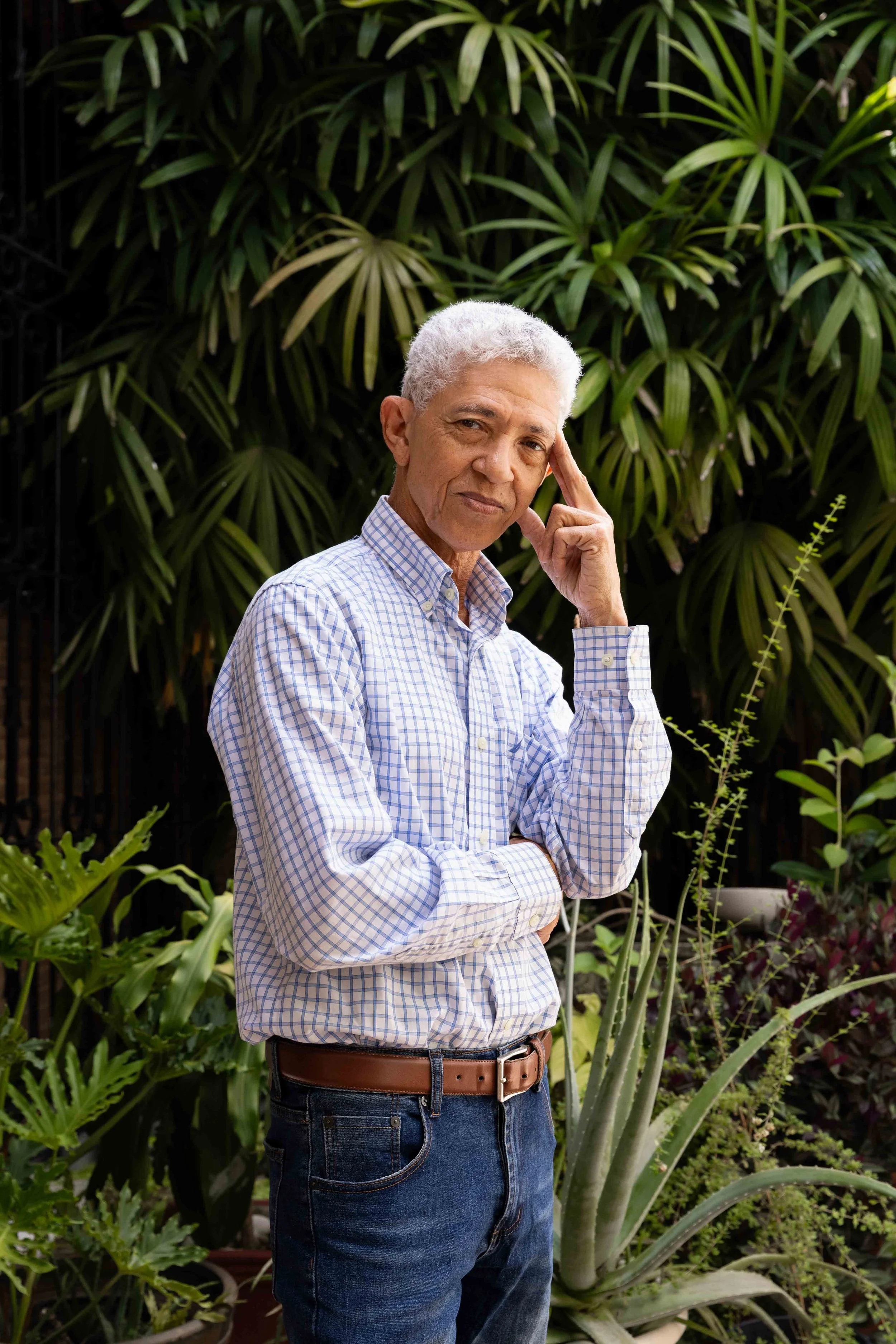
Jorge Caridad has long been considered one of the most influential advocates for larimar and Dominican amber, helping transform both stones from regional curiosities into national symbols. His family founded the Museo Mundo de Ámbar in 1996 and the Museo del Larimar in 2001, both tucked into Santo Domingo’s Colonial Zone.
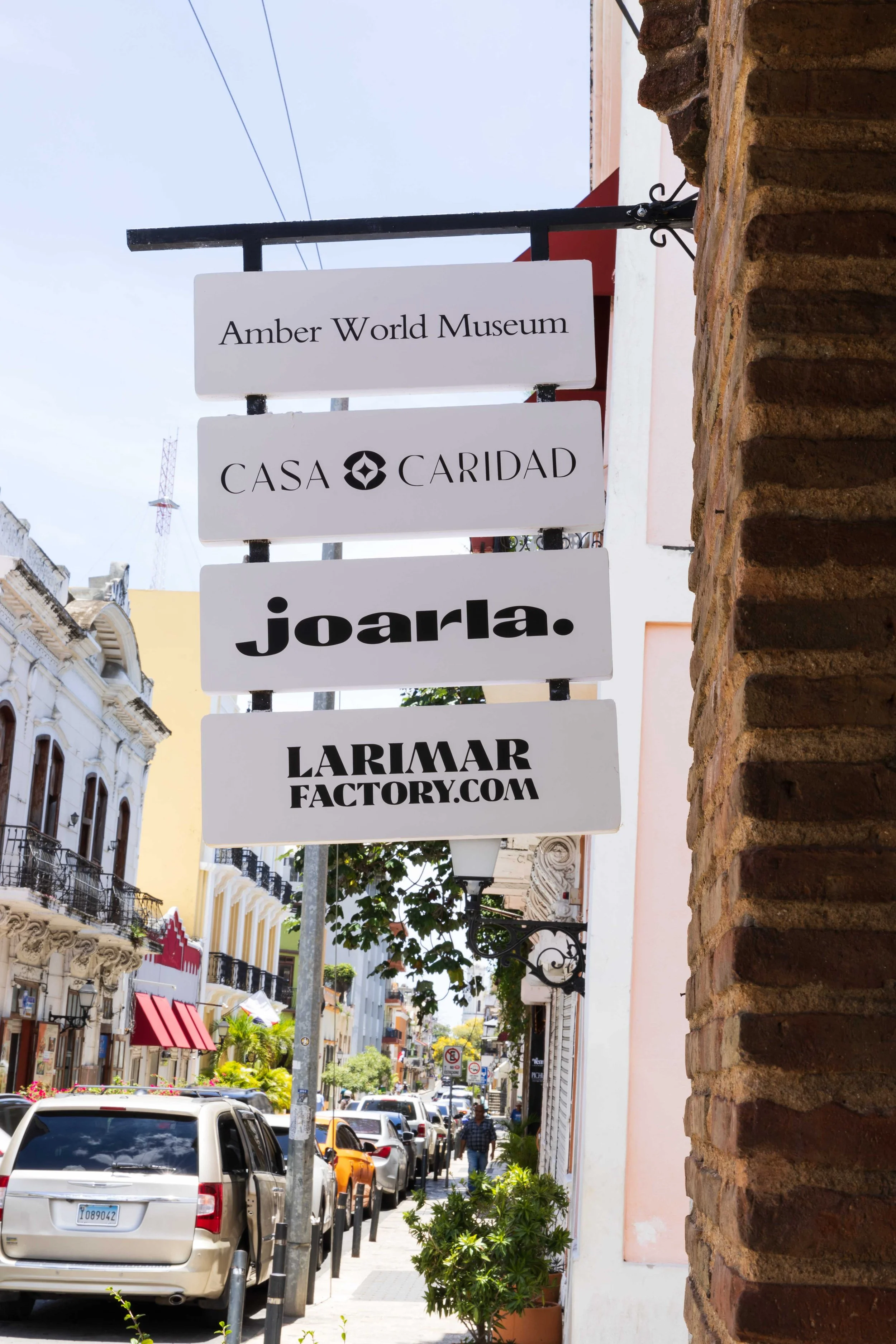
I’ve visited the museums more times than I can count. My children love them for the fossils suspended in amber and the glowing blue stones behind glass cases. I return because they feel like an archive of the island itself — geology, craftsmanship, memory, and identity woven together through stone.
This visit, though, something different caught my eye.
In the museum gift shop, a small display of contemporary jewelry sat apart from the more traditional pieces. One pendant stopped me immediately: larimar carved into the shape of a pilón, the cone-shaped Dominican candy sold in corner stores and clutched in sticky hands at parks across the island.
It was playful, strange, and unapologetically Dominican.
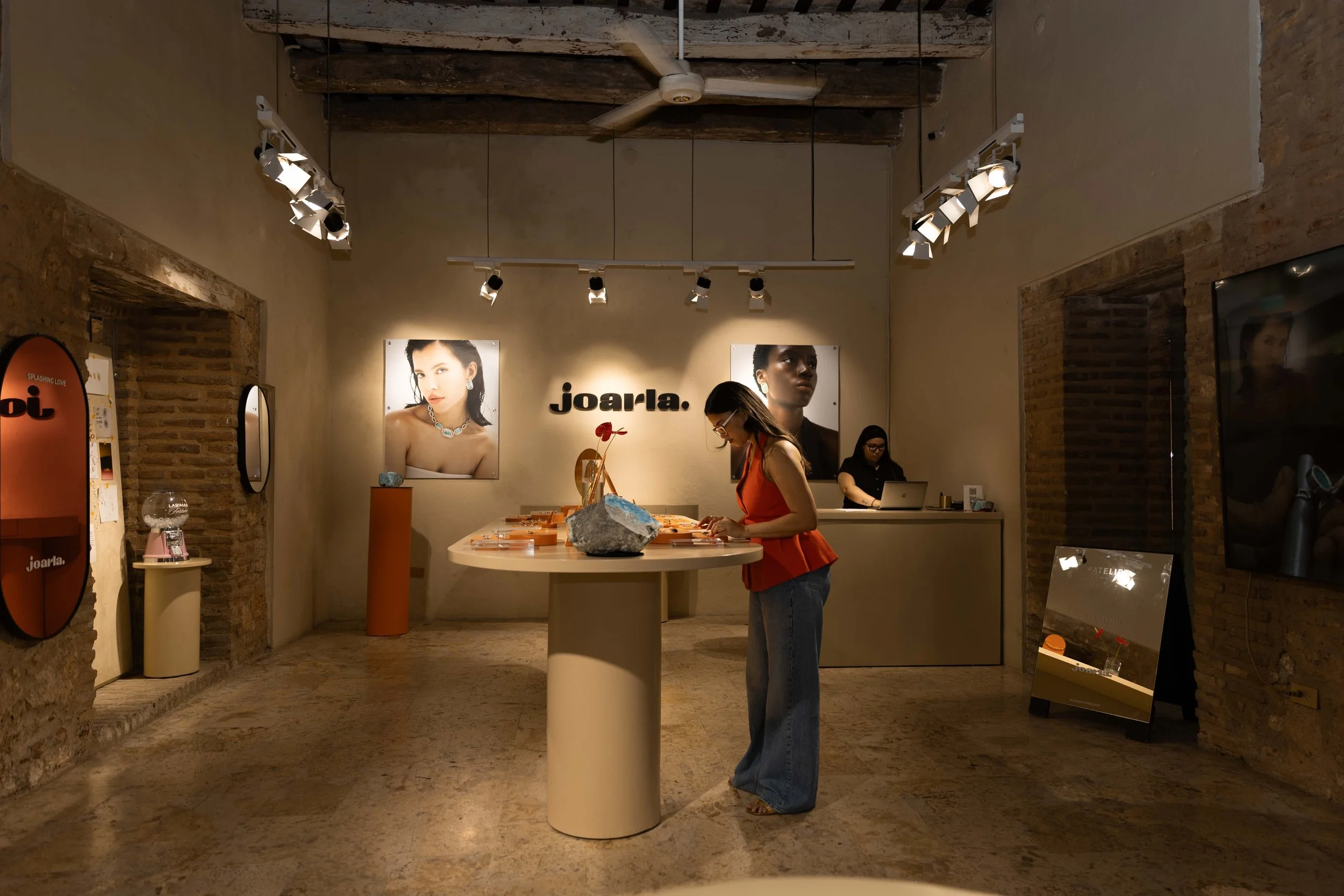
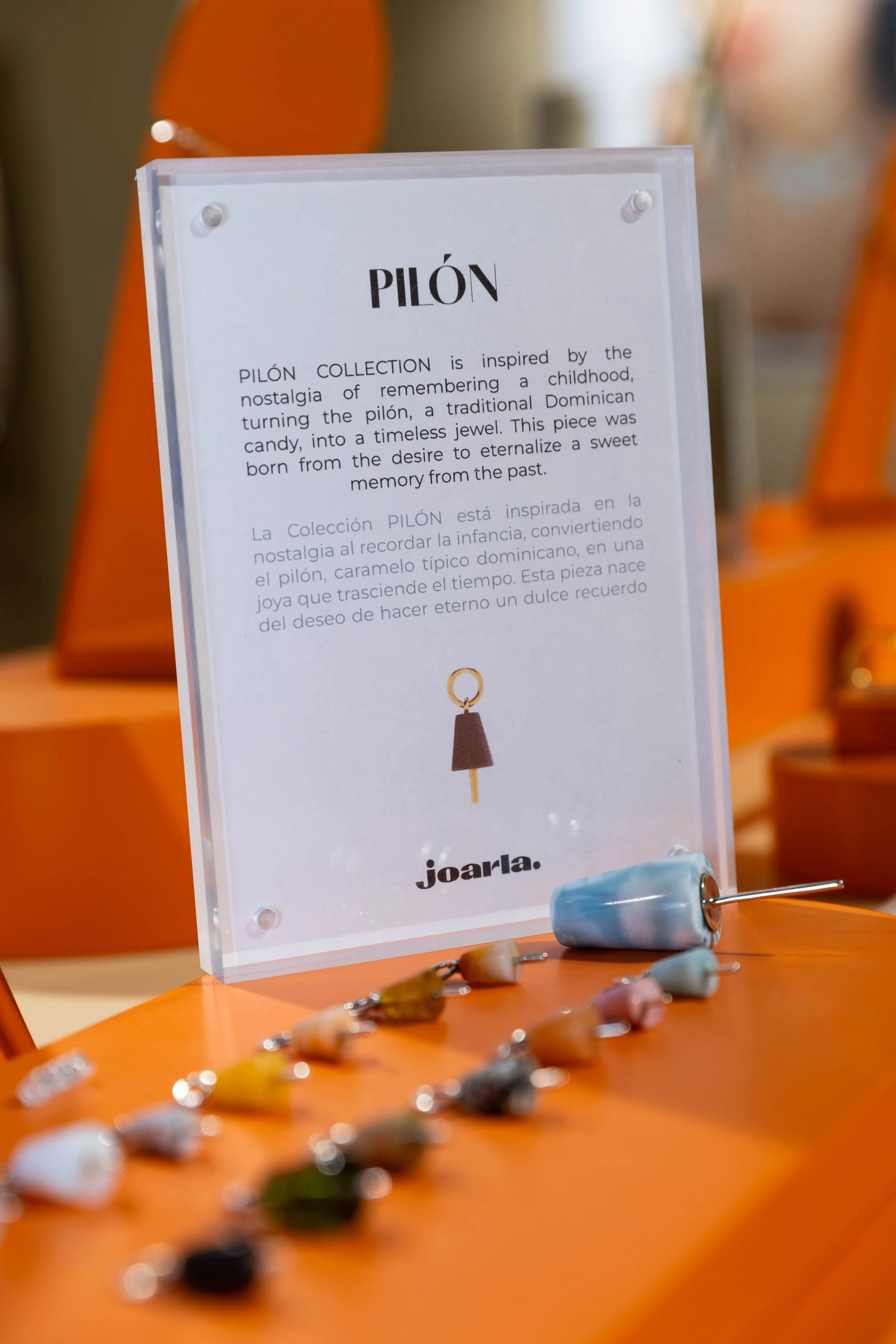
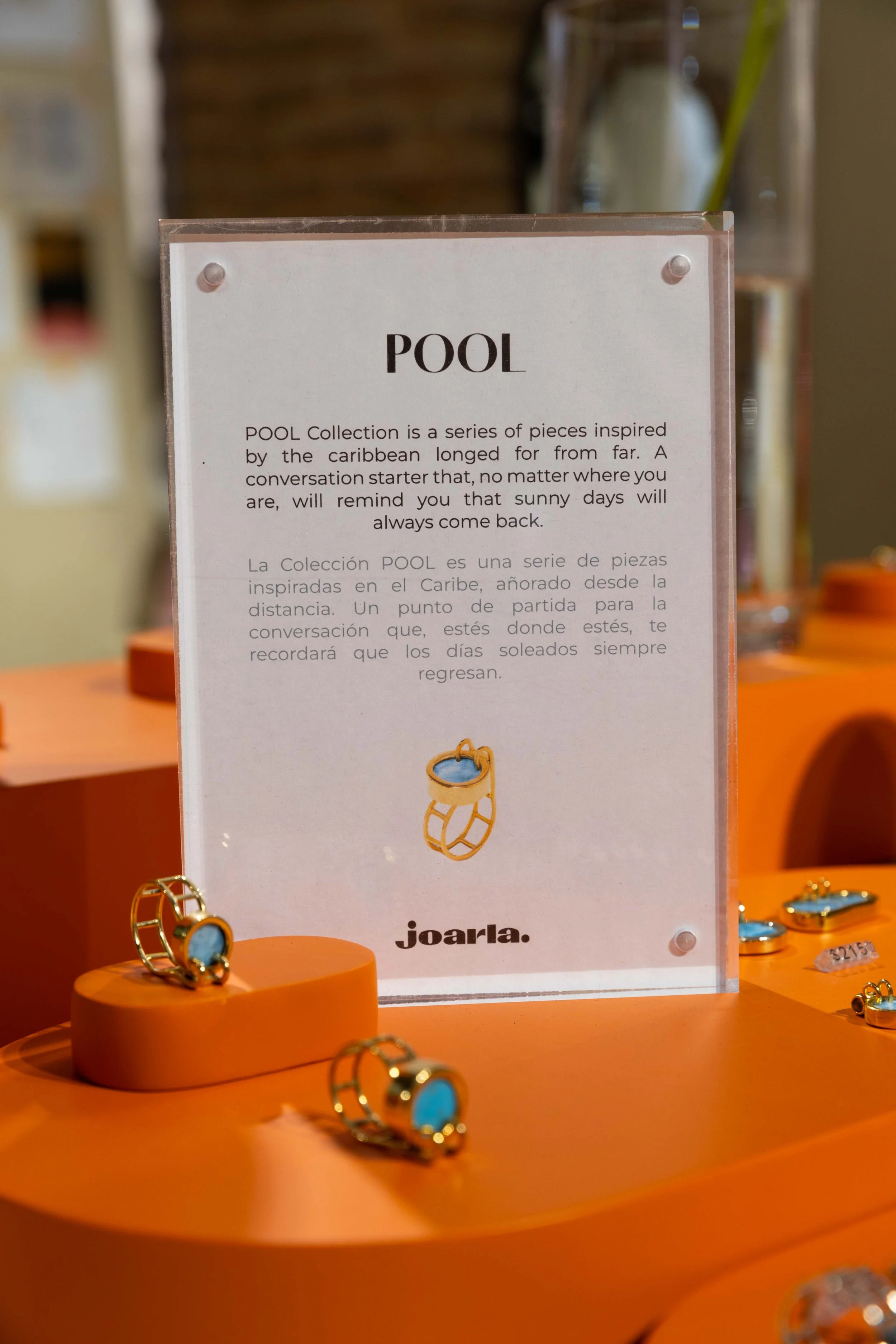
As I stood admiring it, a woman beside me began explaining the inspiration behind the collection. I assumed she worked at the museum shop.
She moved to another piece — rings and pendants shaped like swimming pools, their surfaces filled with the swirling blues and whites of larimar.
“When I was studying in London, I missed home,” she told me. “I missed the ocean. I wanted the water of the Caribbean to come through in the pieces.”
The woman was not a salesperson.
She was Joarla Caridad.
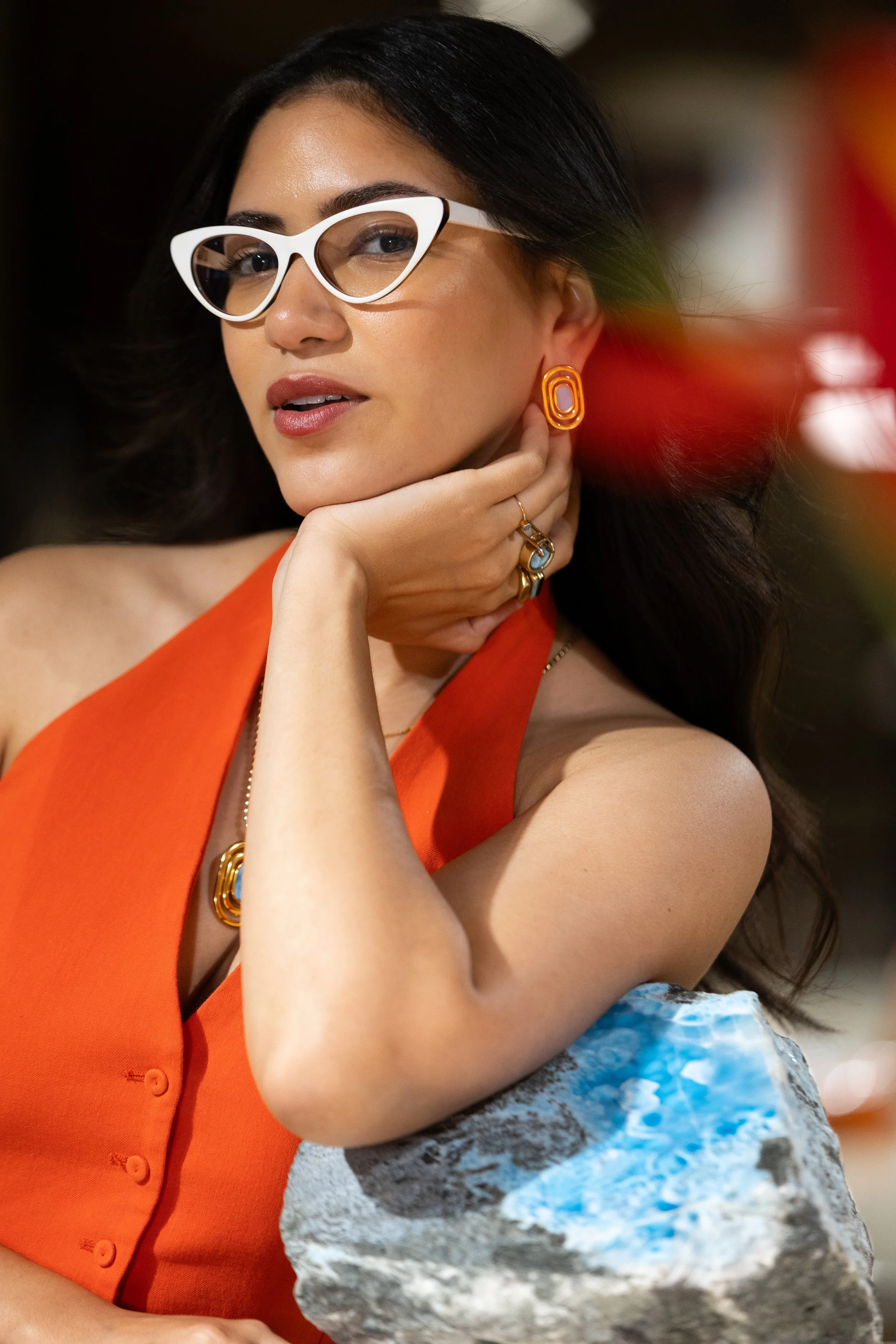
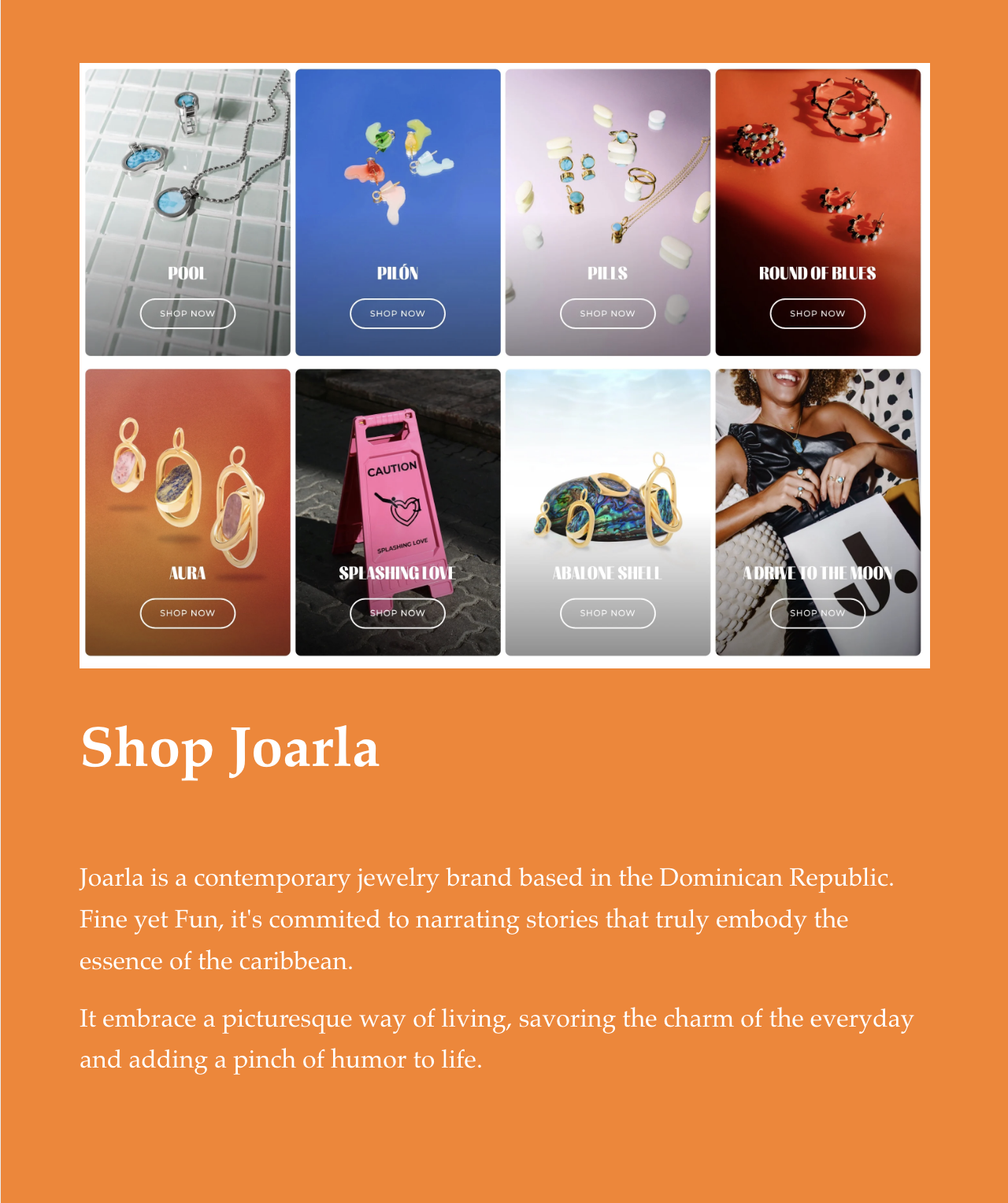
Joarla is Jorge Caridad’s daughter and part of a new generation redefining how larimar is seen, both inside and outside the Dominican Republic. Her jewelry draws as much from Dominican memory and visual culture as it does from traditional gemstone design. Baseball stitching becomes texture and form. Caribbean pools become sculptural rings. Familiar childhood sweets become finely crafted pendants.

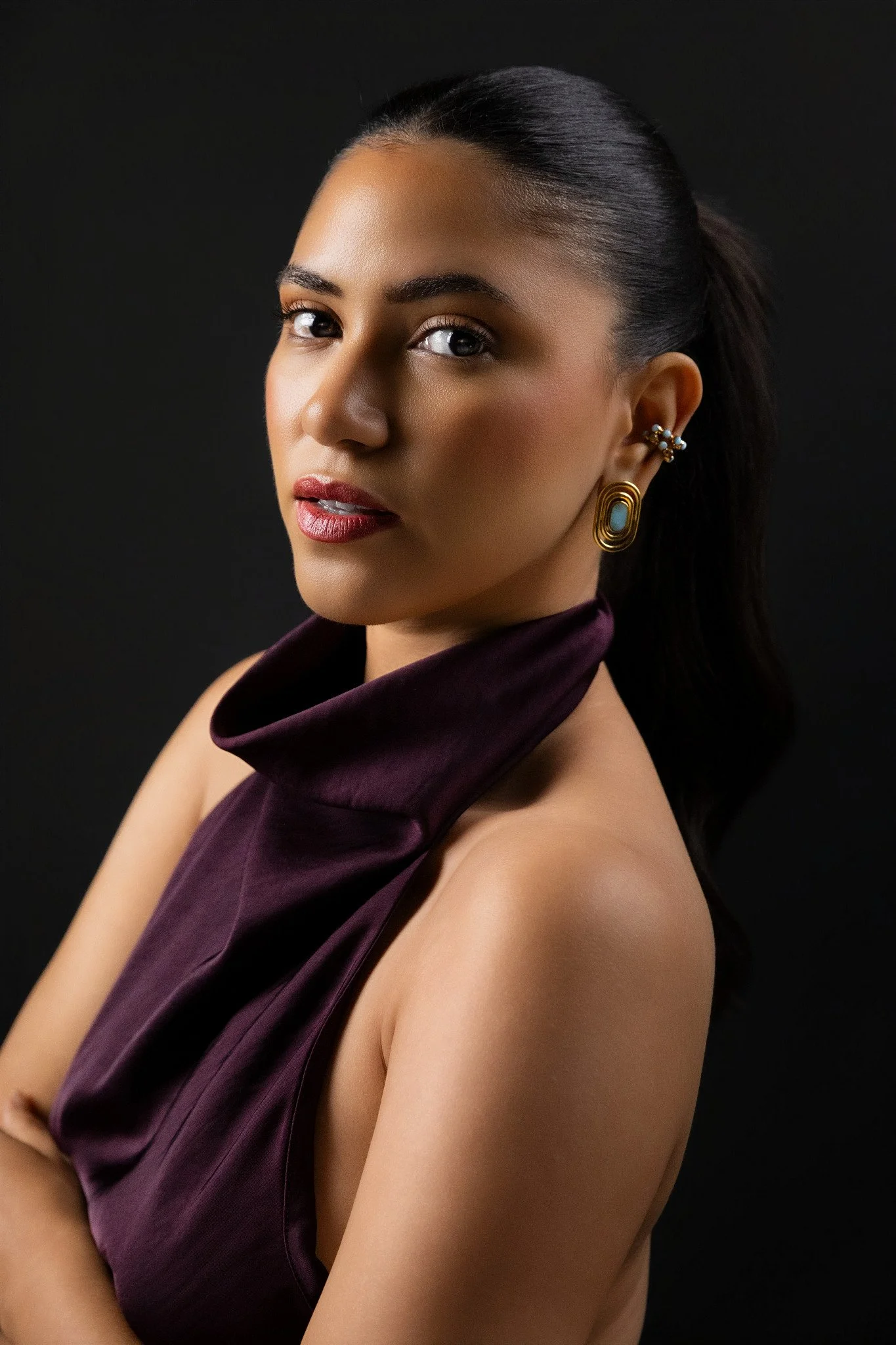
The pieces feel less like souvenirs and more like small acts of cultural storytelling.
Over the next two weeks, I photographed Joarla, her dad, and the spaces where their work takes shape.
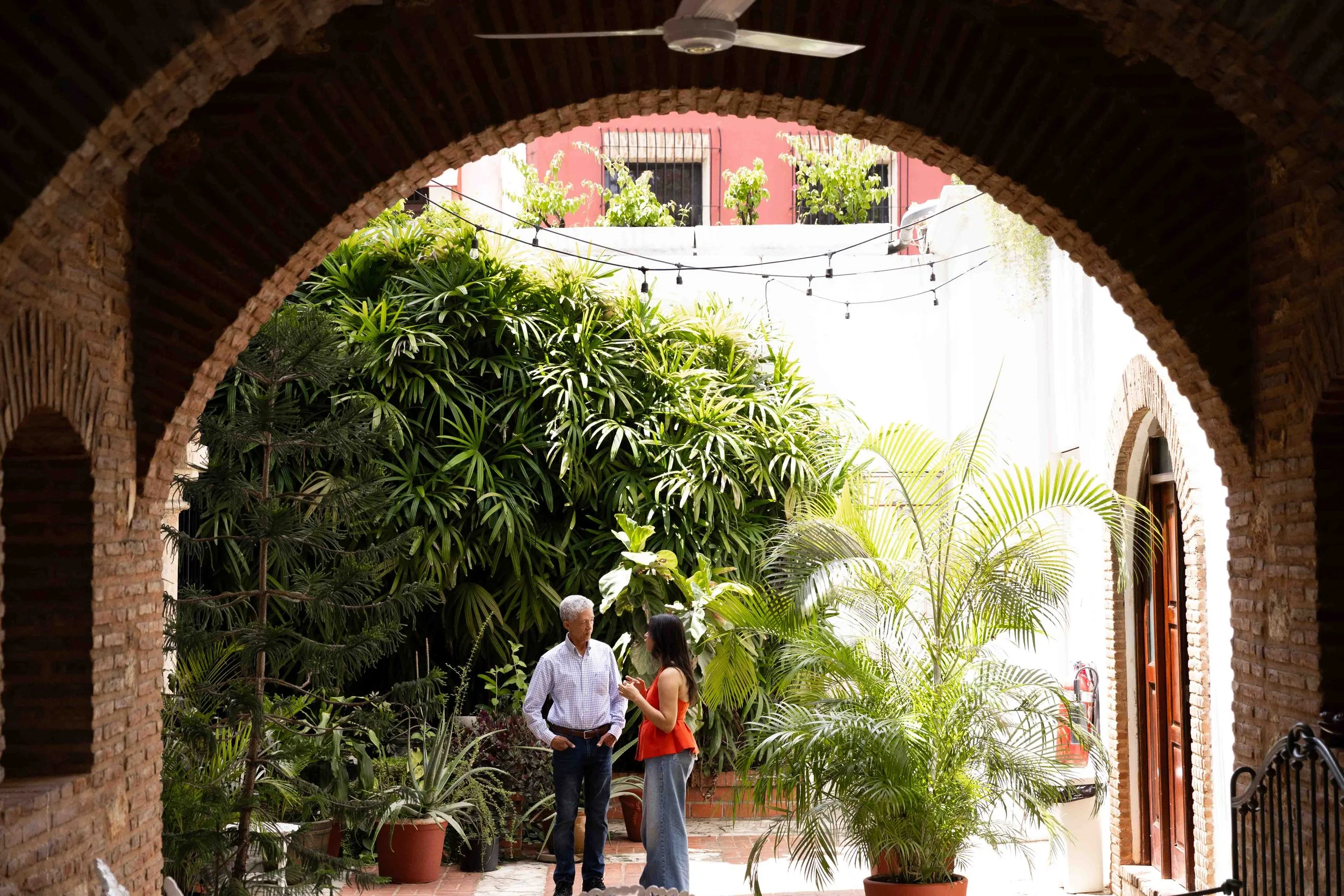
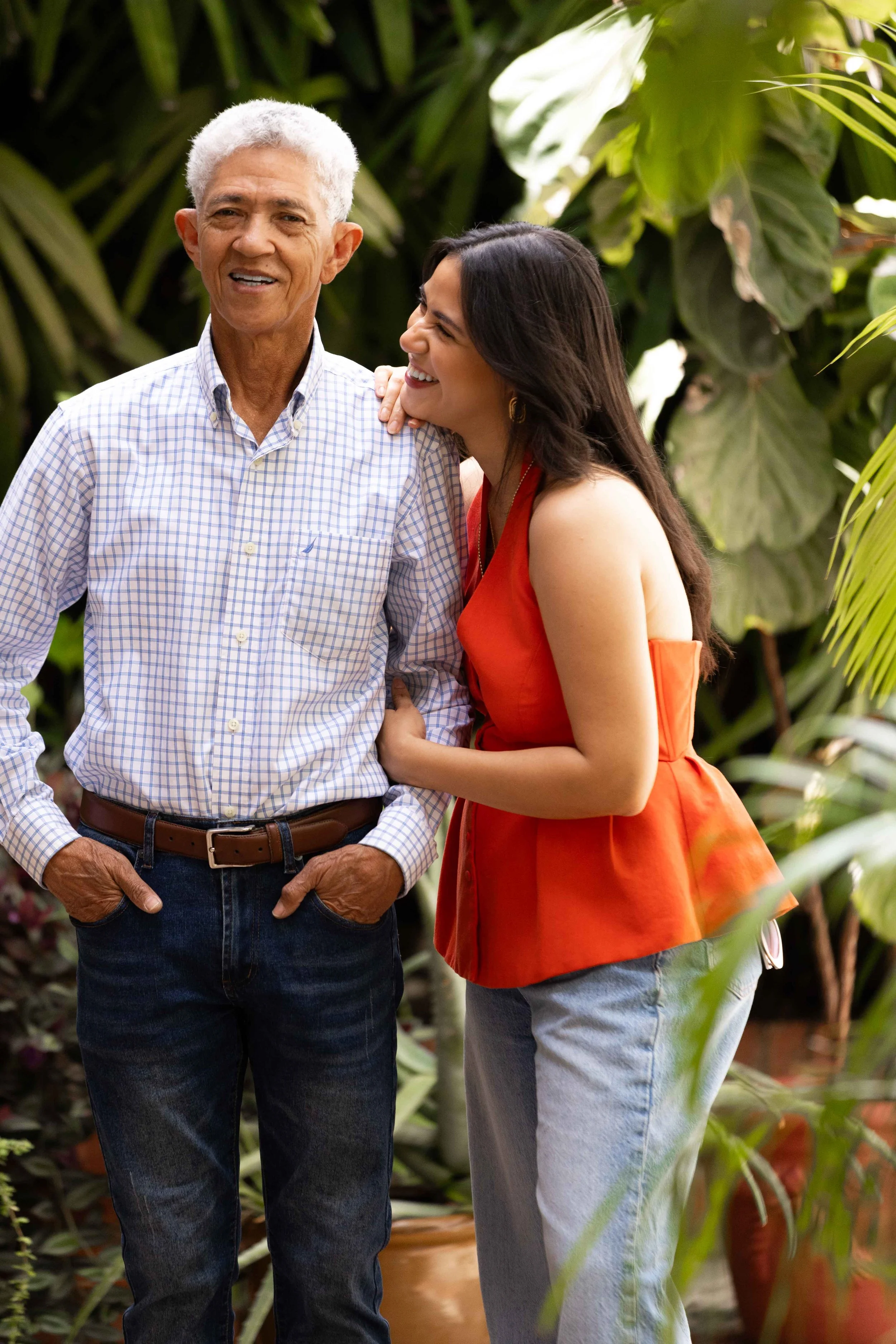
The Caridad family’s museums and workshop sit in the heart of Santo Domingo’s Colonial Zone, known lovingly as Zona to locals. It’s a walled portion of the city where cobblestone streets wind between stone buildings and centuries-old balconies that hail back to the times of Christopher Columbus. It’s one of my favourite places in the city, a walkable pocket of history tucked against the glass towers and traffic of modern Santo Domingo. In Zona, the past never feels particularly far away.
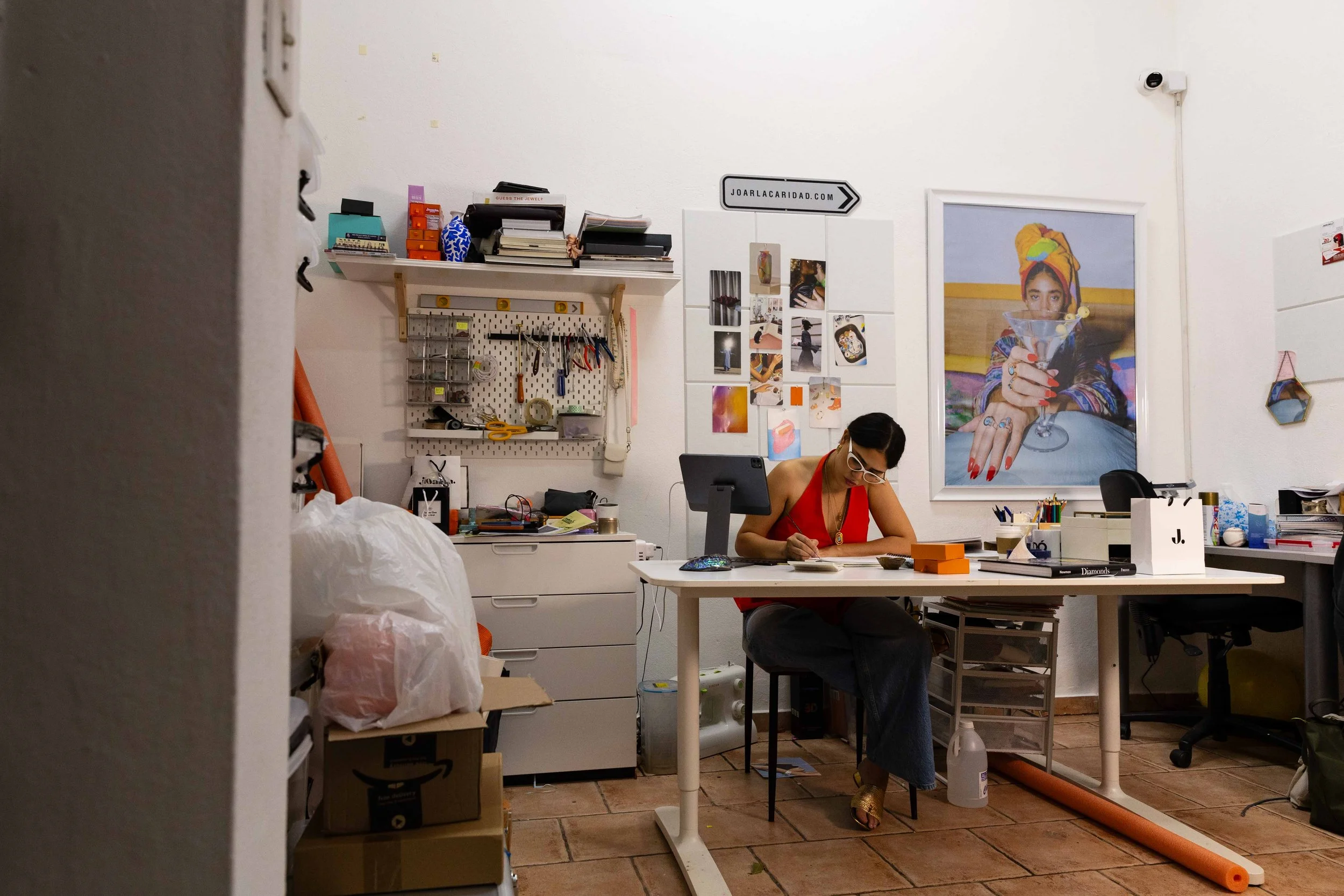
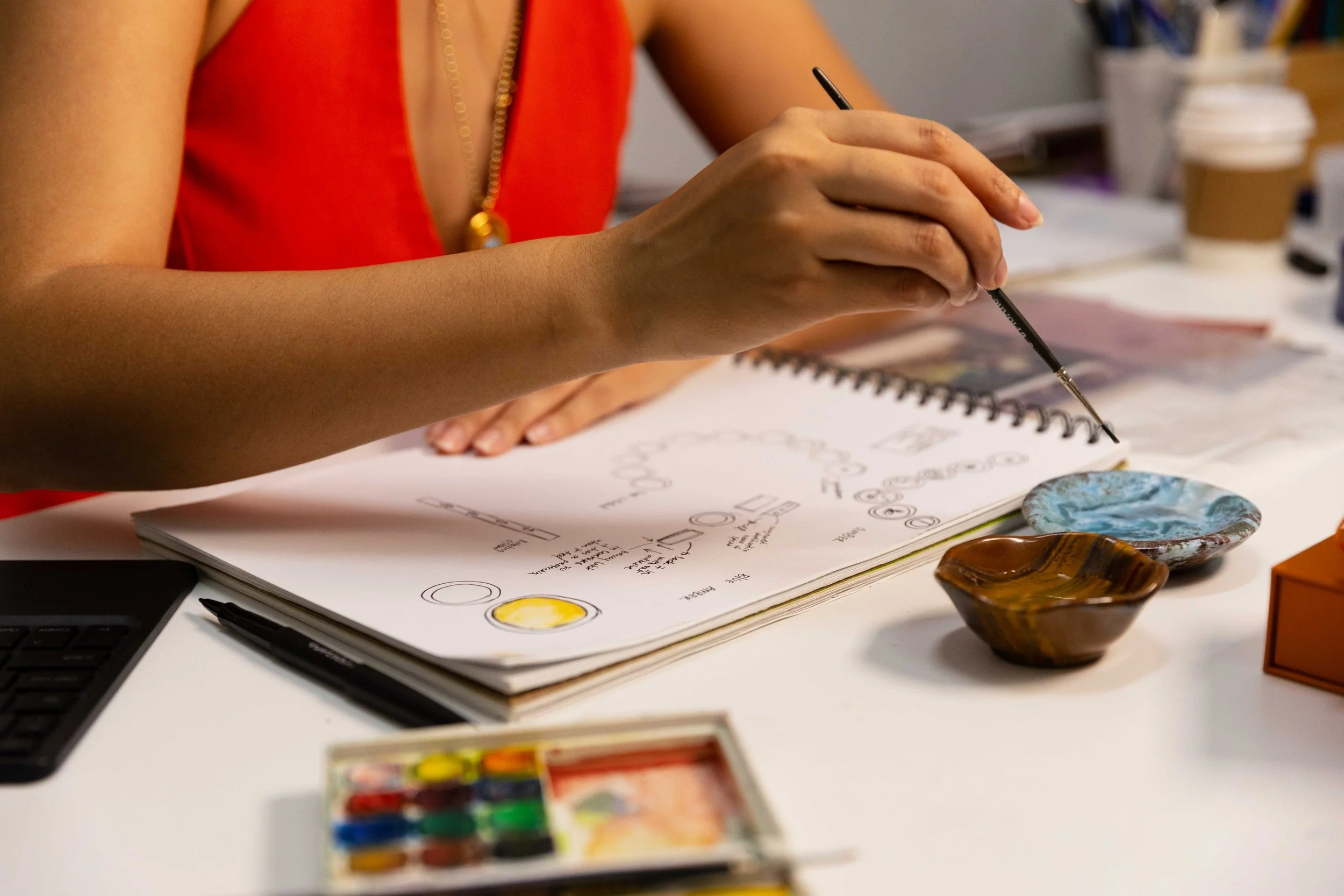
In the courtyard of the Amber Museum, shaded beneath a canopy of trees and old stone walls, Joarla opens the door to her small studio. It’s in this space where her dreams make their way from her mind to paper. Inspiration references are scattered on the walls, gemstone books litter the tables, and fabric and sewing machines are tossed aside to round out this show of creativity.

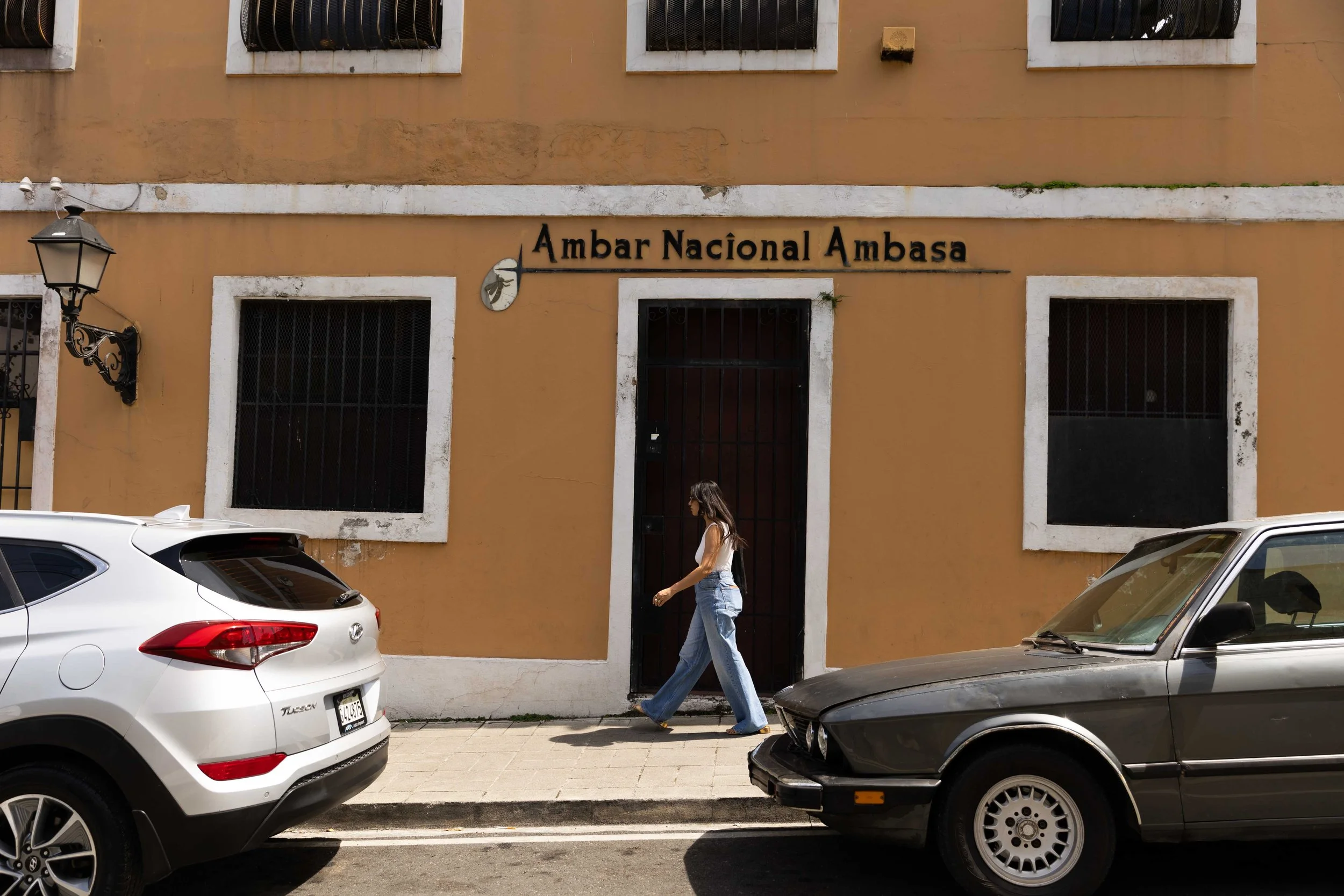
As we step outside the museum we cross the street and open the door to what was once Joarla’s childhood home. The building now houses the family’s jewelry factory.
“That used to be my bedroom,” she says as she peeks through a window into the small room where jewelry makers are working.
“I have pictures of me growing up right here,” she says.
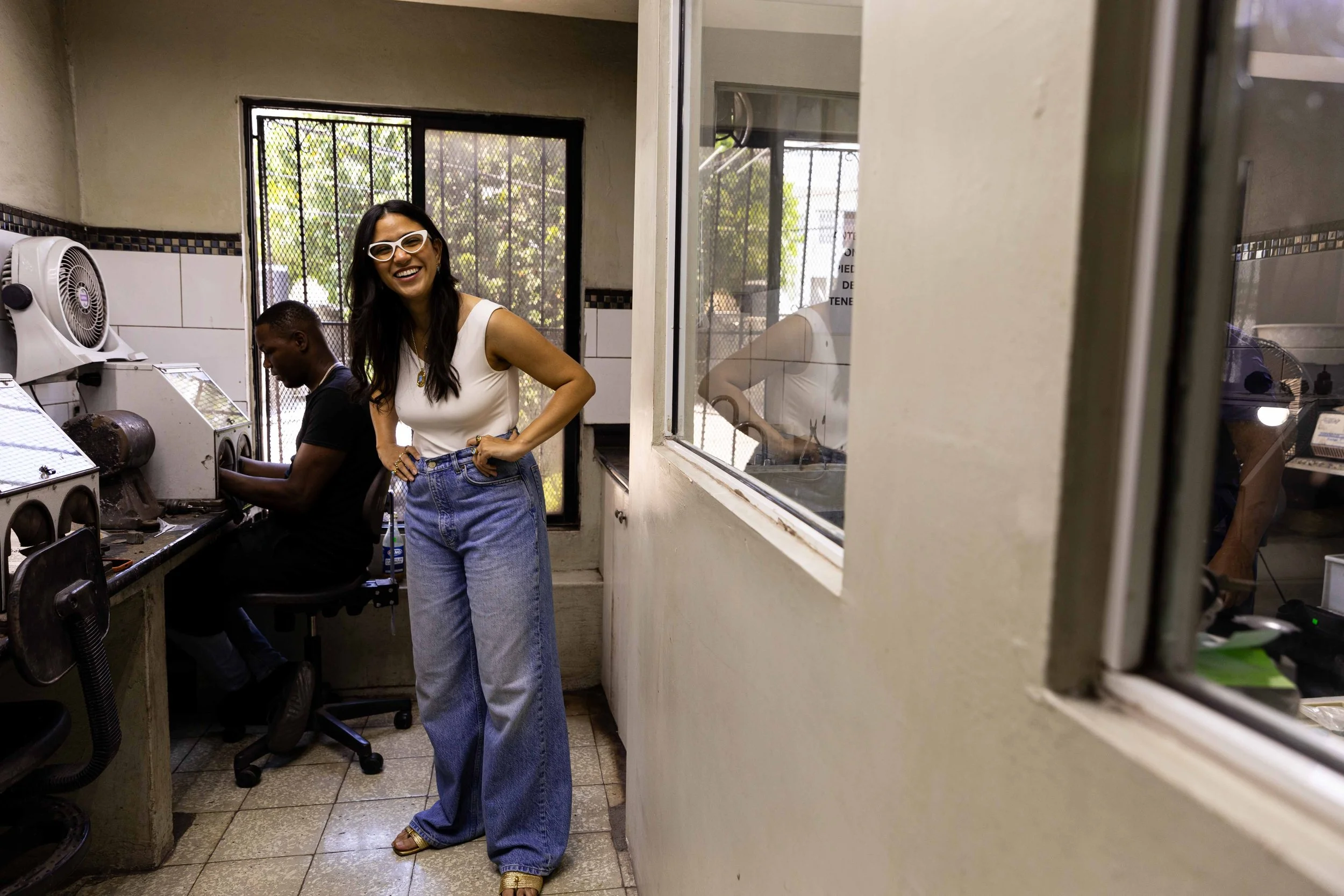
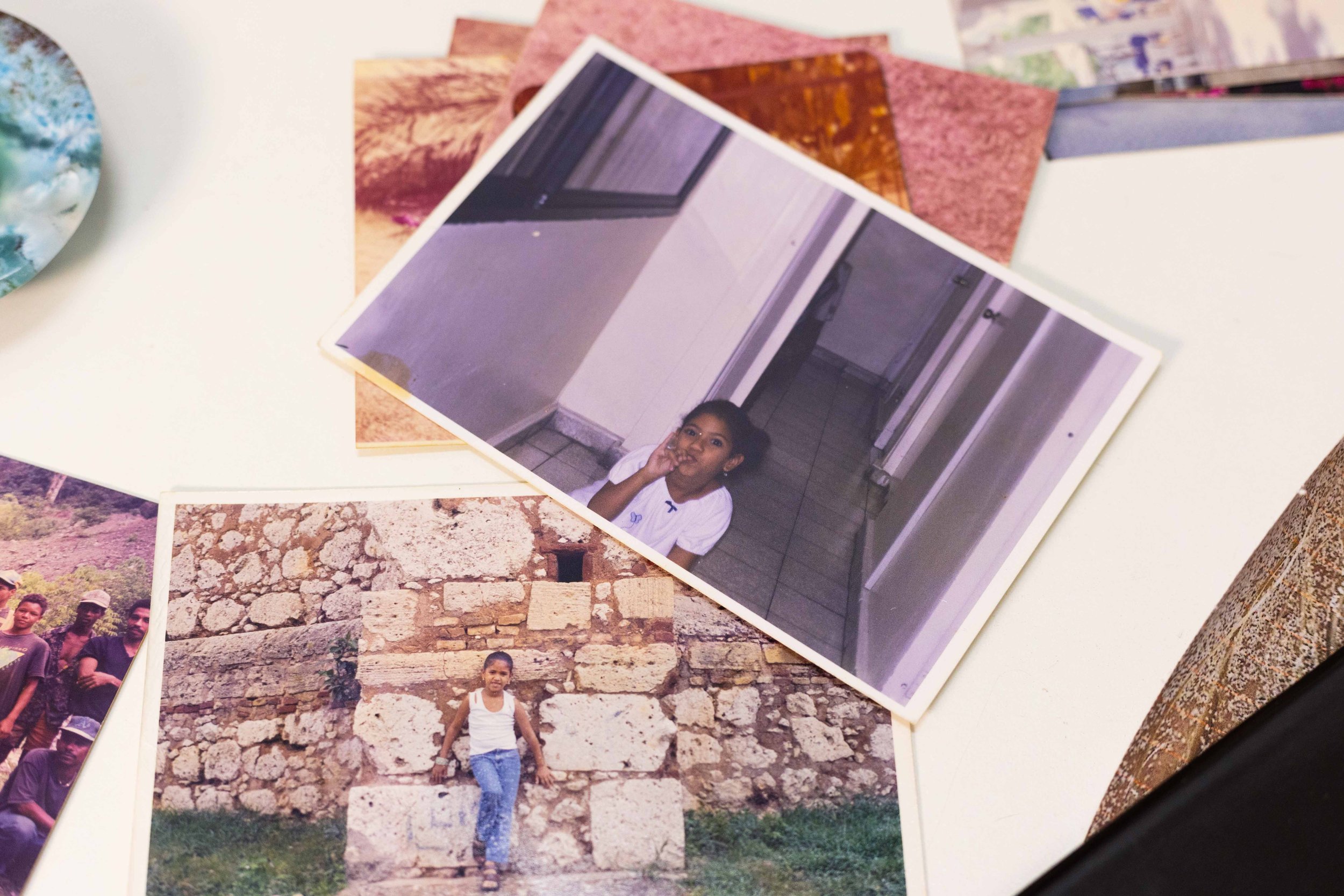
But now instead of living inside these walls she watches as these crafters turn her visions into reality. Joarla moves easily through the rooms, stopping constantly — checking proportions, examining veining in a stone, laughing with employees she’s known for years.
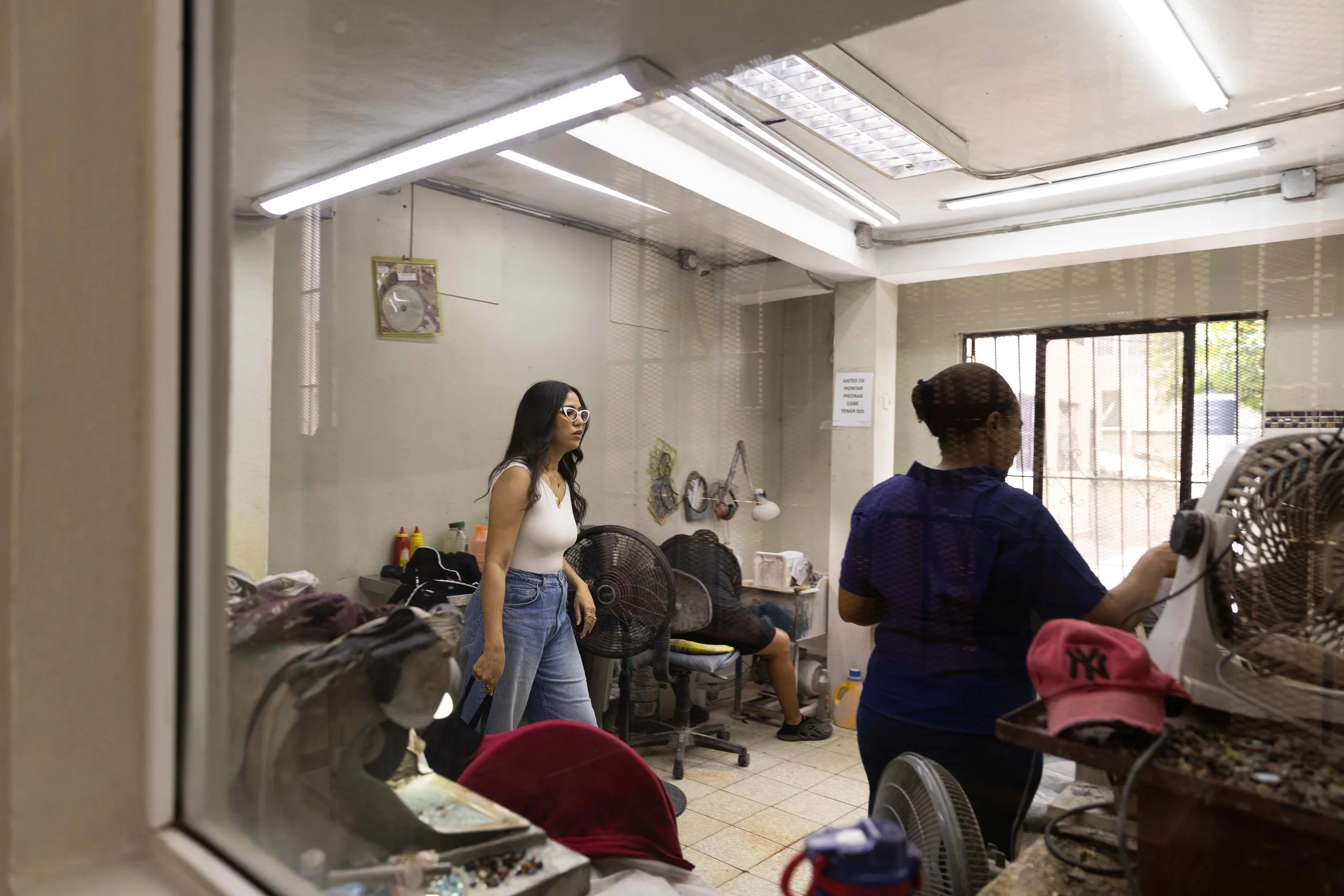
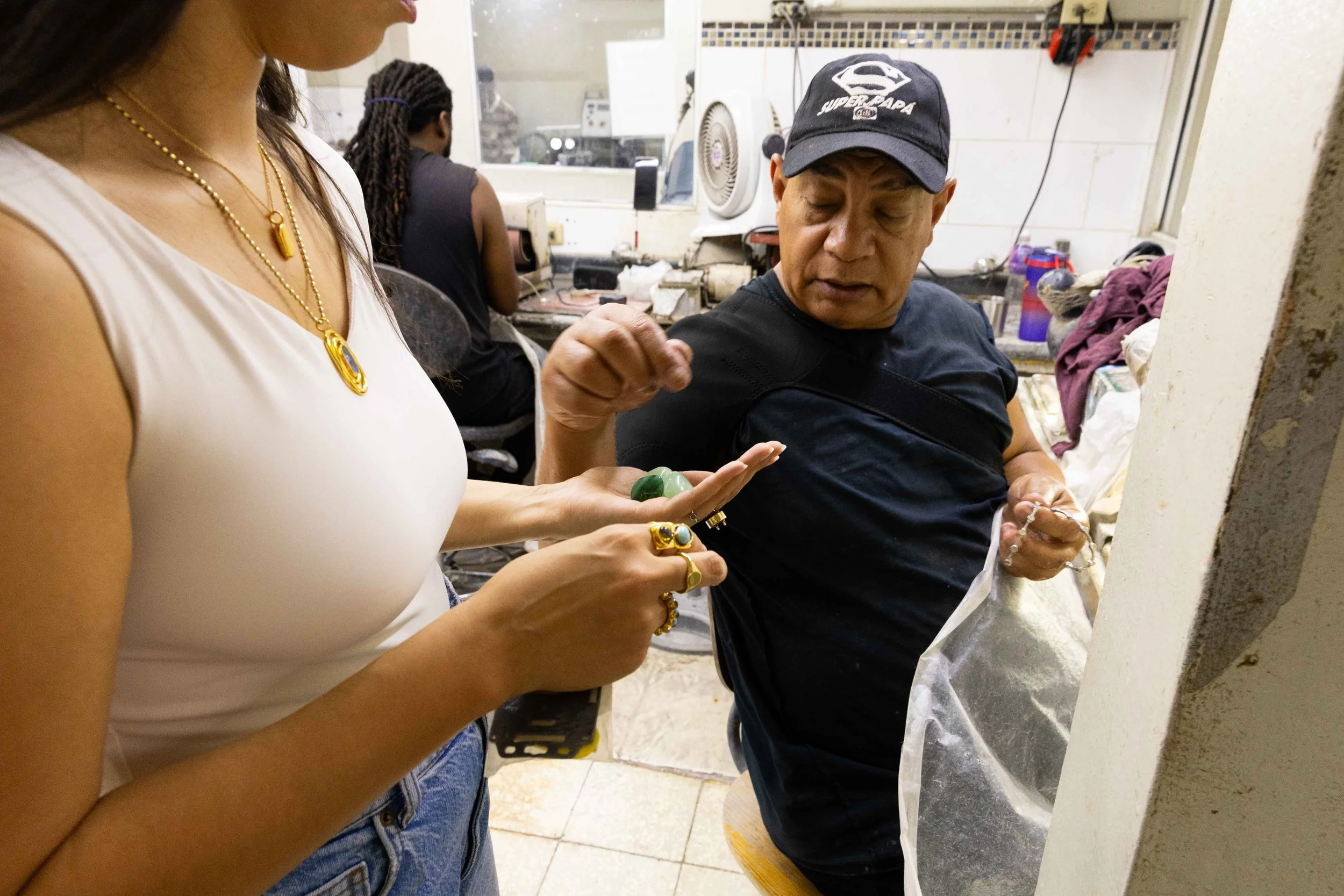
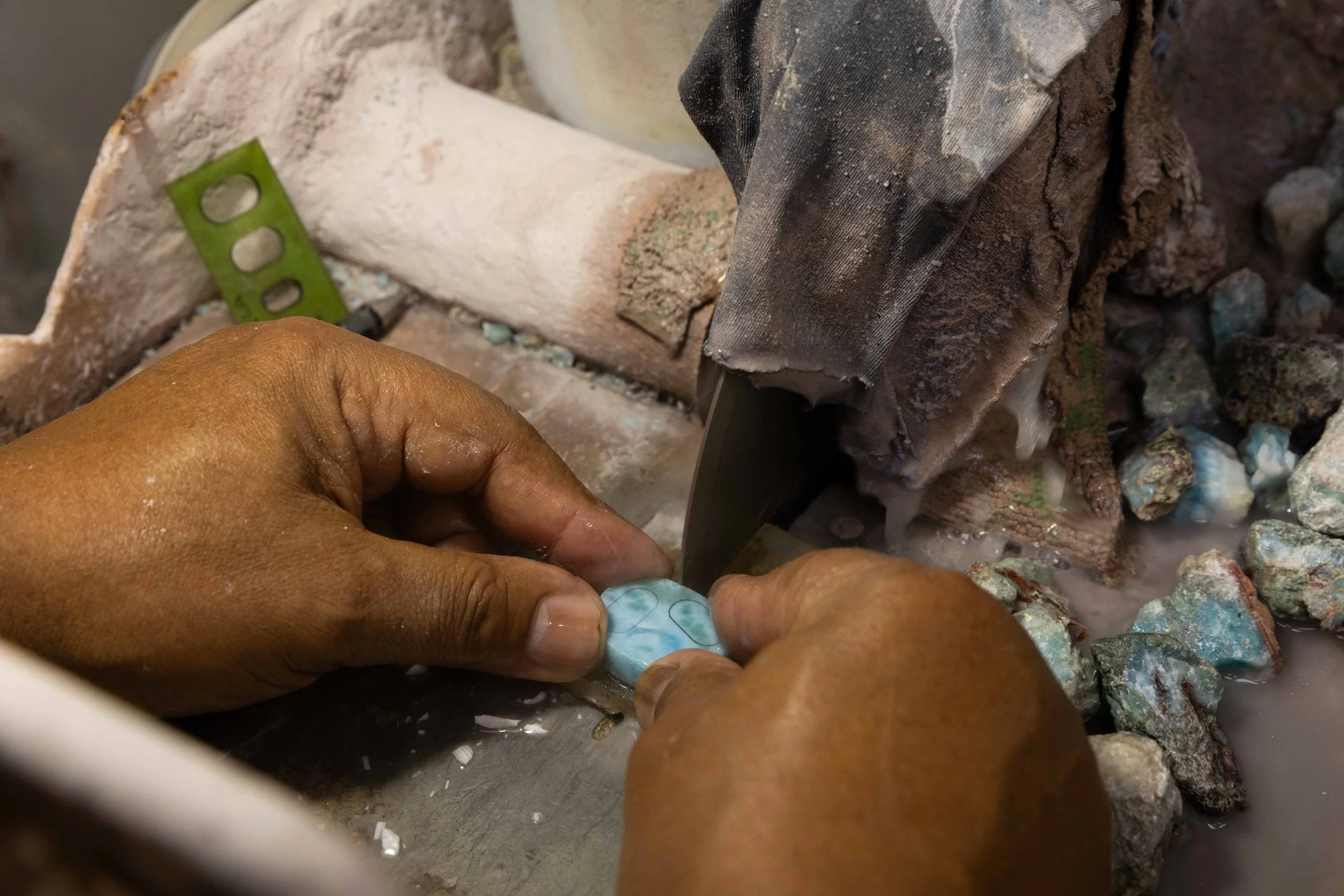
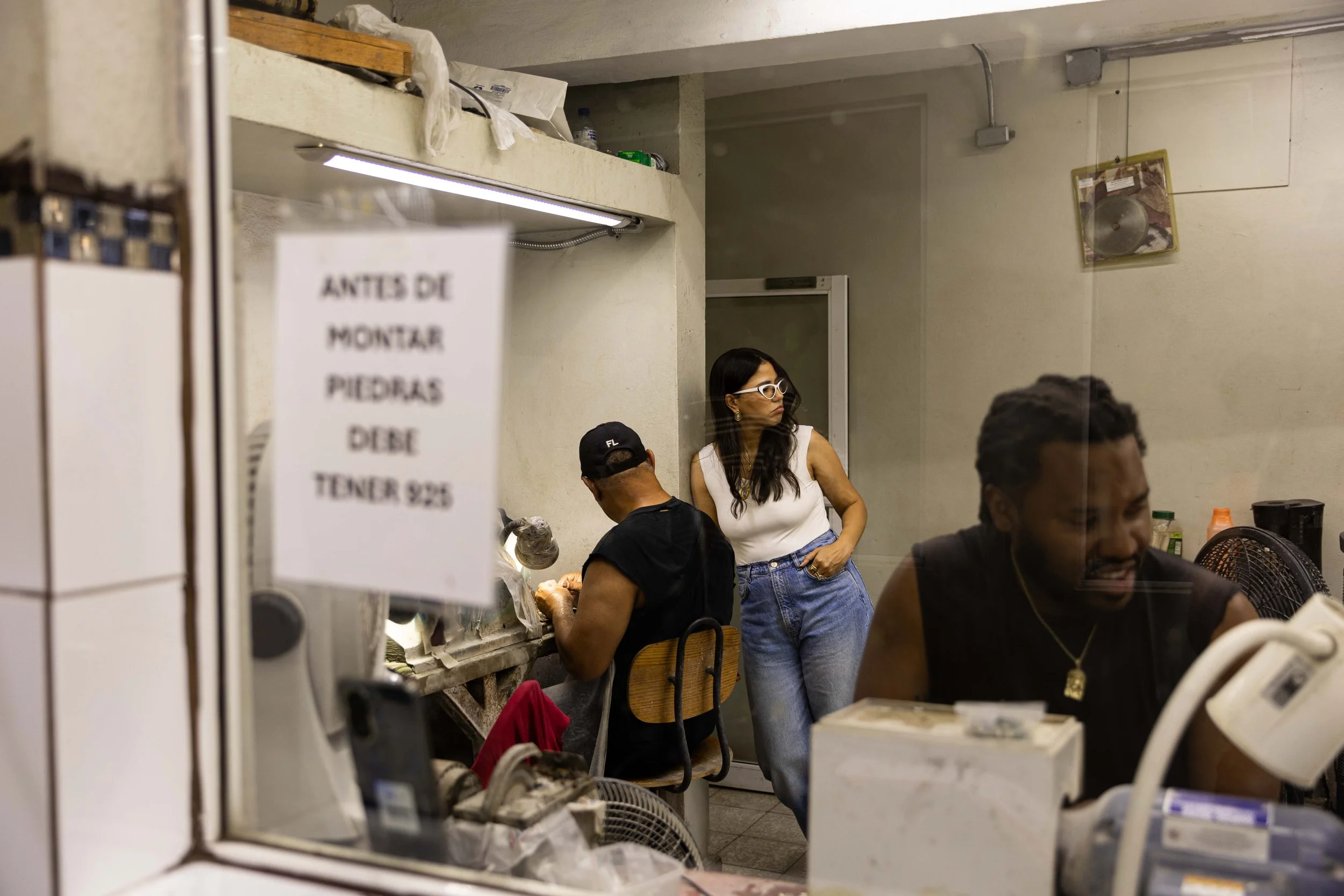
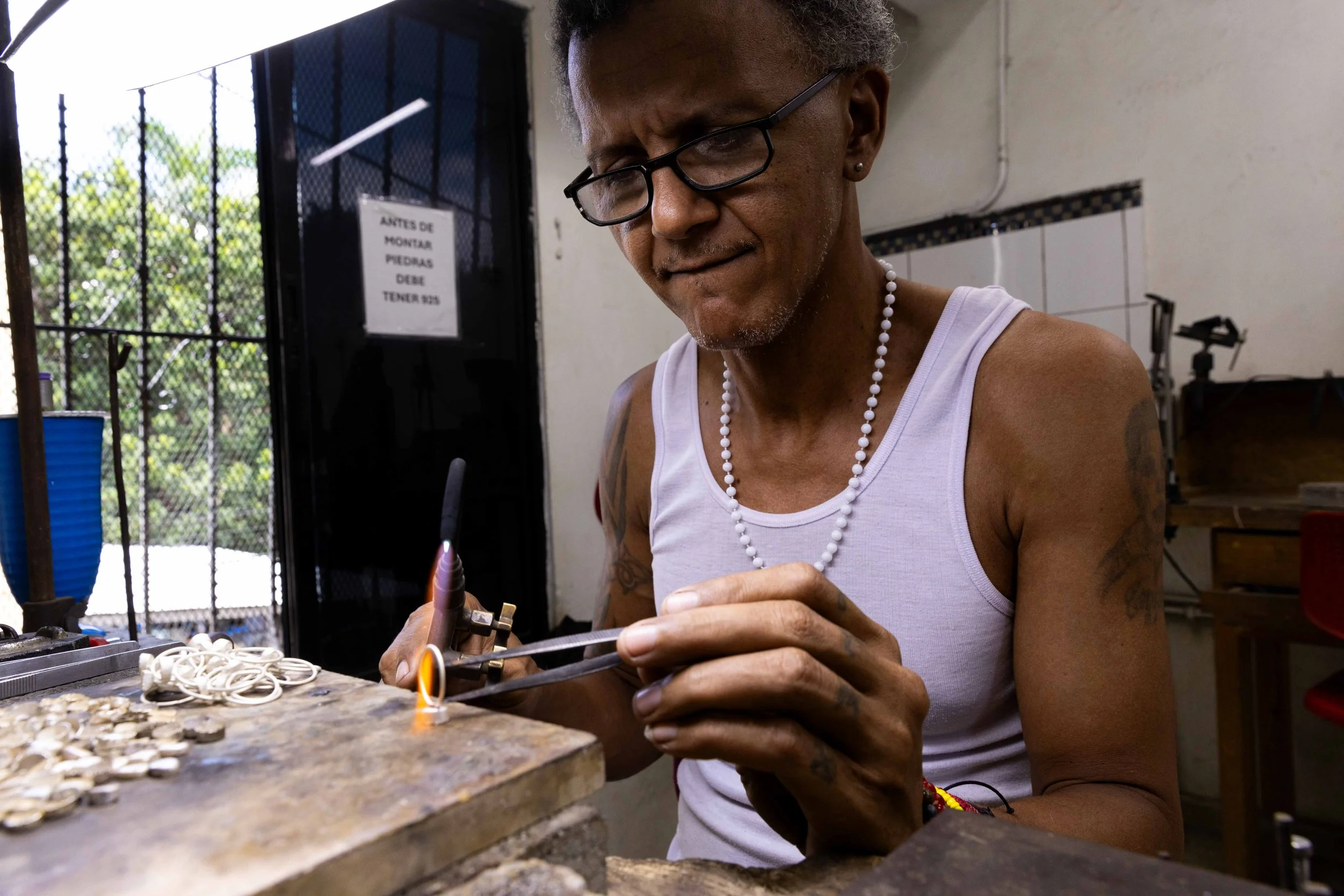
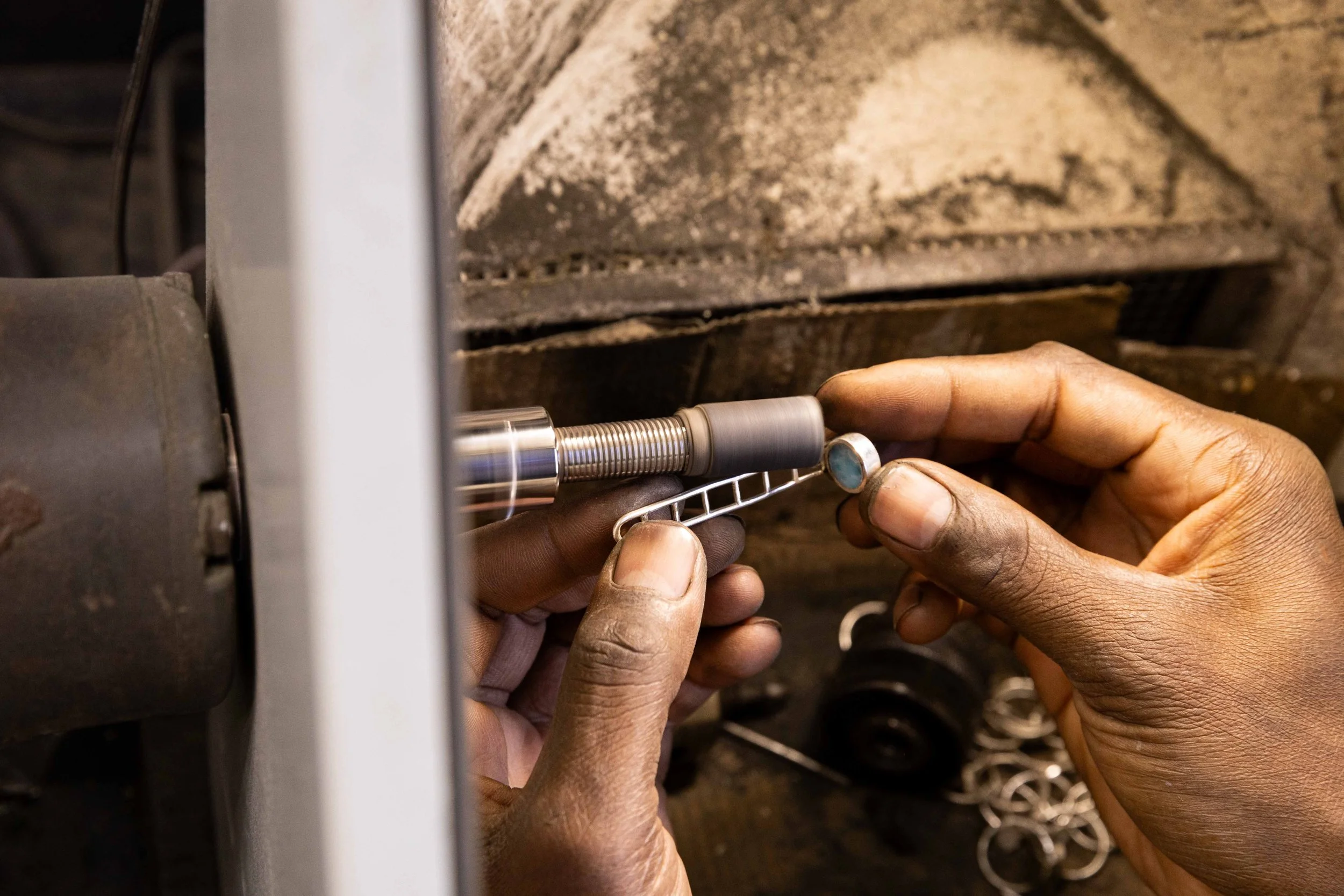
Inside the factory it feels almost archival. Shelves stretch floor to ceiling with trays of larimar and amber waiting for the right design. Wooden molds for settings line the walls. Buckets filled with raw stone sit scattered across the floor.
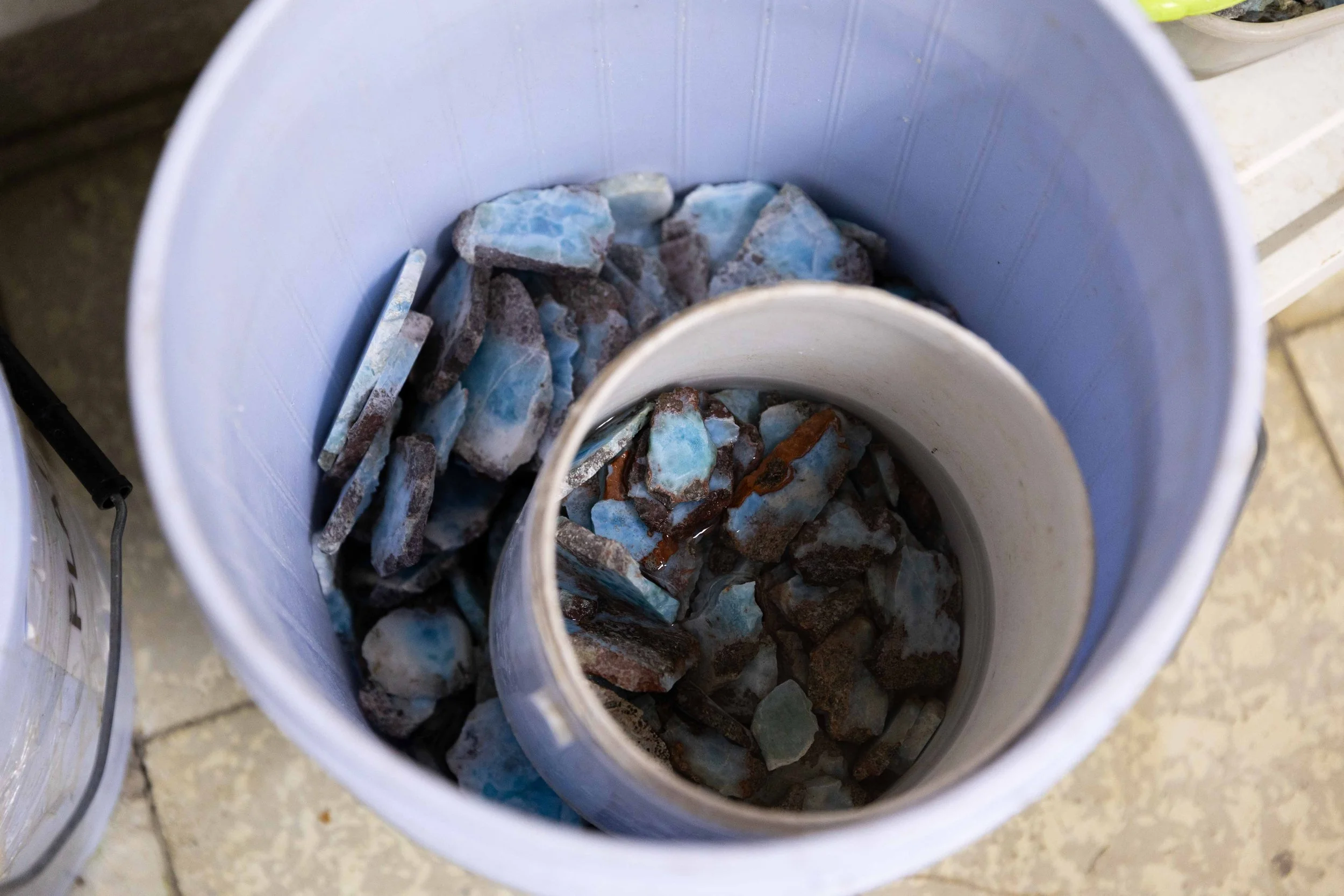
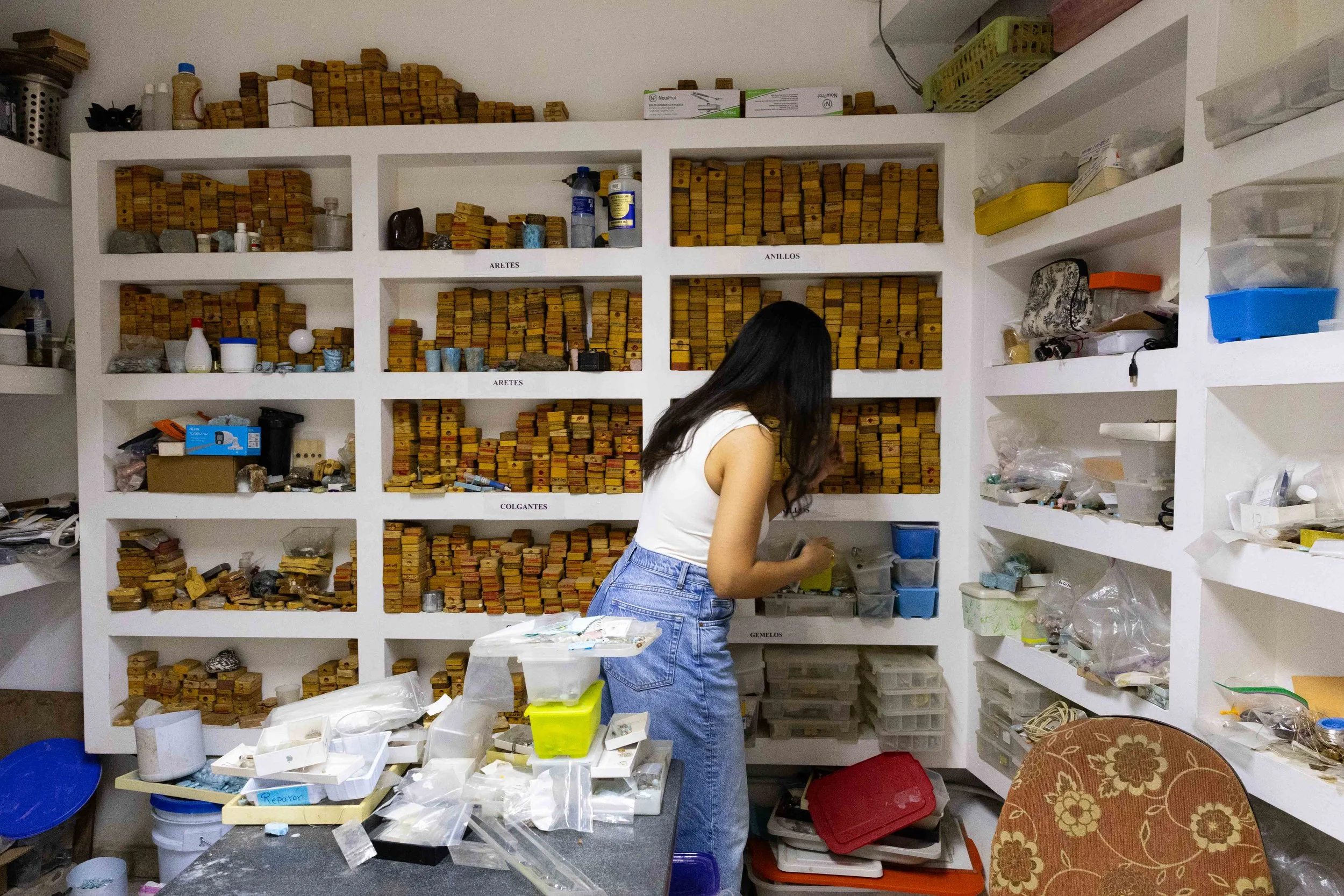
In one room she laughs, pointing toward rows of carefully catalogued materials organized by her mother.
“We don’t know where anything is,” she says.”But she does!”
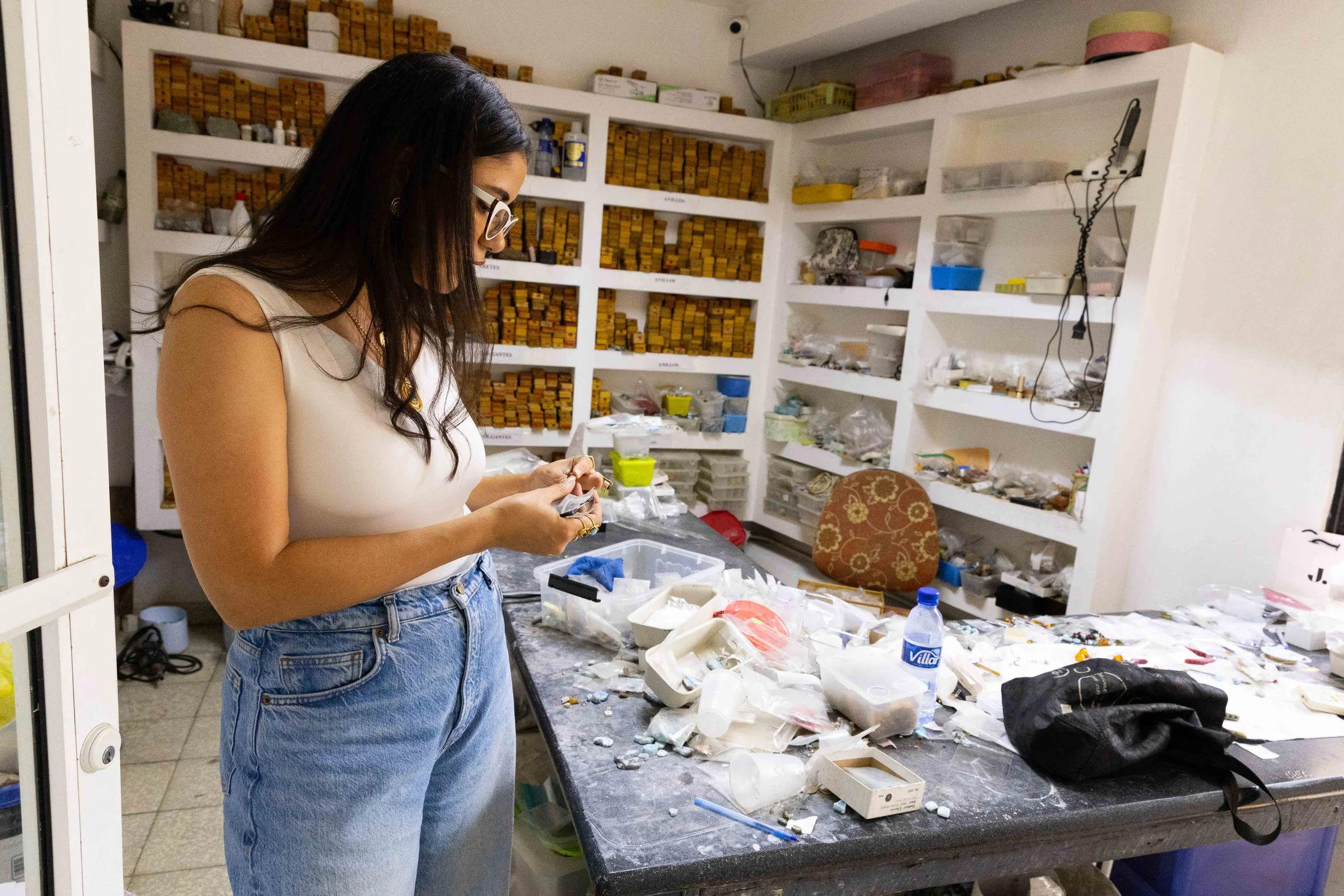
Joarla could easily build her career elsewhere. Her work has already carried her far beyond the island, and her aesthetic feels at home within the contemporary design world. But her work remains rooted here — in Dominican material, Dominican memory, and Dominican craftsmanship.
That connection is what gives the pieces their weight.
Larimar may be the national stone of the Dominican Republic, but in the hands of the Caridad family it becomes something more personal; a way of preserving the small Dominican icons that bind people together. Tiny pieces of cultural memory carried forward in stone.